Melania Trump Skips Dallas Mid‑Term Convention
Melania Trump will not attend President Donald Trump’s mid‑term convention in Dallas next week,
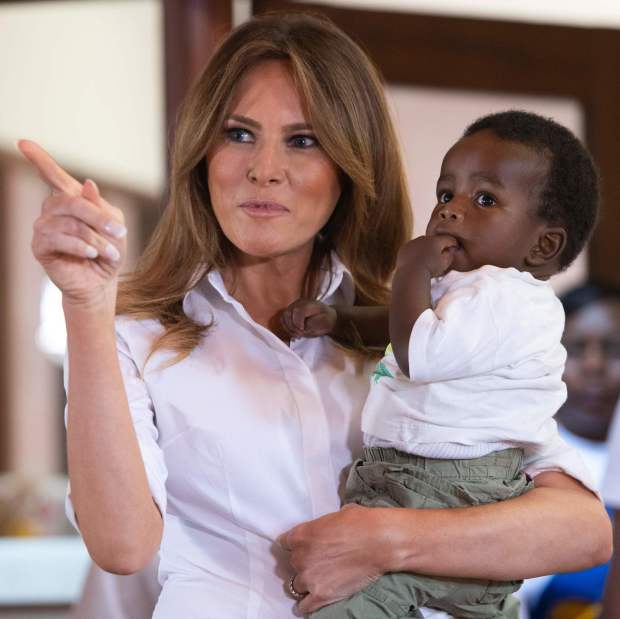
marking a notable snub as her husband seeks to rally support ahead of the November elections.
The decision was confirmed by reports that she will skip the event entirely,
joining a pattern of limited public appearances that she has previously joked about, noting how rare her outings have become.
Her absence is significant because the Dallas convention is a high‑profile gathering intended to boost the Republican ticket.
By not appearing, Melania forgoes the visual support that spouses typically provide at such rallies.
No official reason has been given beyond the simple statement that she will not be present.
The Independent’s coverage, dated September 4, 2026, highlights the move as “the latest high‑profile snub,
” underscoring the growing distance between the former first lady and the campaign trail.
The Rise and Fall of the Trump‑MELANIA Gold Token
CryptoRank reported that the GOLD token was a distinct project, separate from the official TRUMP and MELANIA tokens already in circulation.
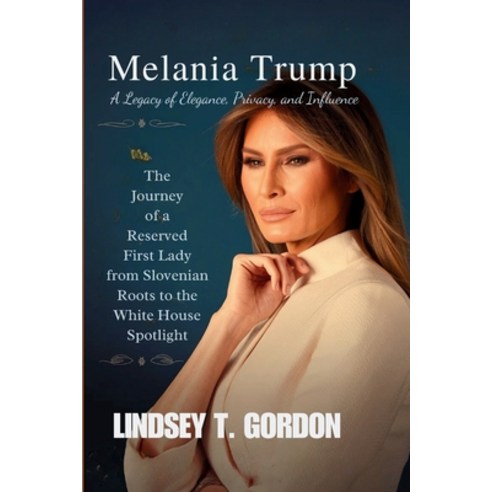
The platform clarified that this new asset differed significantly in both its underlying structure and its issuance schedule.
It was not an extension or variant of the existing branded tokens but rather an independent entity with its own operational framework.
Similarly, Topstar News identified the collapsed GOLD token as a separate asset from the established TRUMP and MELANIA tokens.
The outlet emphasized that the structural design and token issuance methods for GOLD were entirely different from those of the original projects.
This distinction is critical for understanding the nature of the asset in question.
It was not merely a rebranding or a secondary offering tied to the previous tokens.
Instead, it operated under a unique set of parameters and distribution mechanisms.
The available evidence confirms two primary points regarding the identity of the GOLD token:
- It was structurally distinct from the official TRUMP and MELANIA tokens.
- It utilized a different issuance schedule and method compared to the existing assets.
Both sources, CryptoRank and Topstar News, aligned on this fundamental separation.
They did not describe GOLD as a derivative or a linked component of the earlier token launches.
Instead, they characterized it as a standalone financial instrument.
This separation suggests that the performance, governance,
and technical foundation of GOLD were independent of the prior Trump-branded digital assets.
However, the provided evidence does not detail the specific technical differences in the code or smart contracts.
It also does not explain the exact timeline of the issuance schedule or the specific reasons behind the structural divergence.
Furthermore,
the sources do not confirm any direct operational link between the creators of the original tokens and the developers of the GOLD token.
The focus remains strictly on the classification of the asset as separate and distinct in its design and launch methodology.
Without additional data, the precise mechanics of this separation remain undefined, but the consensus is clear:
GOLD was not the same product as the earlier TRUMP or MELANIA tokens.
From Model to First Lady: Melania’s Style Evolution
When Melania first began making public appearances in the late 1990s, her style was similar to that of other models of the day.
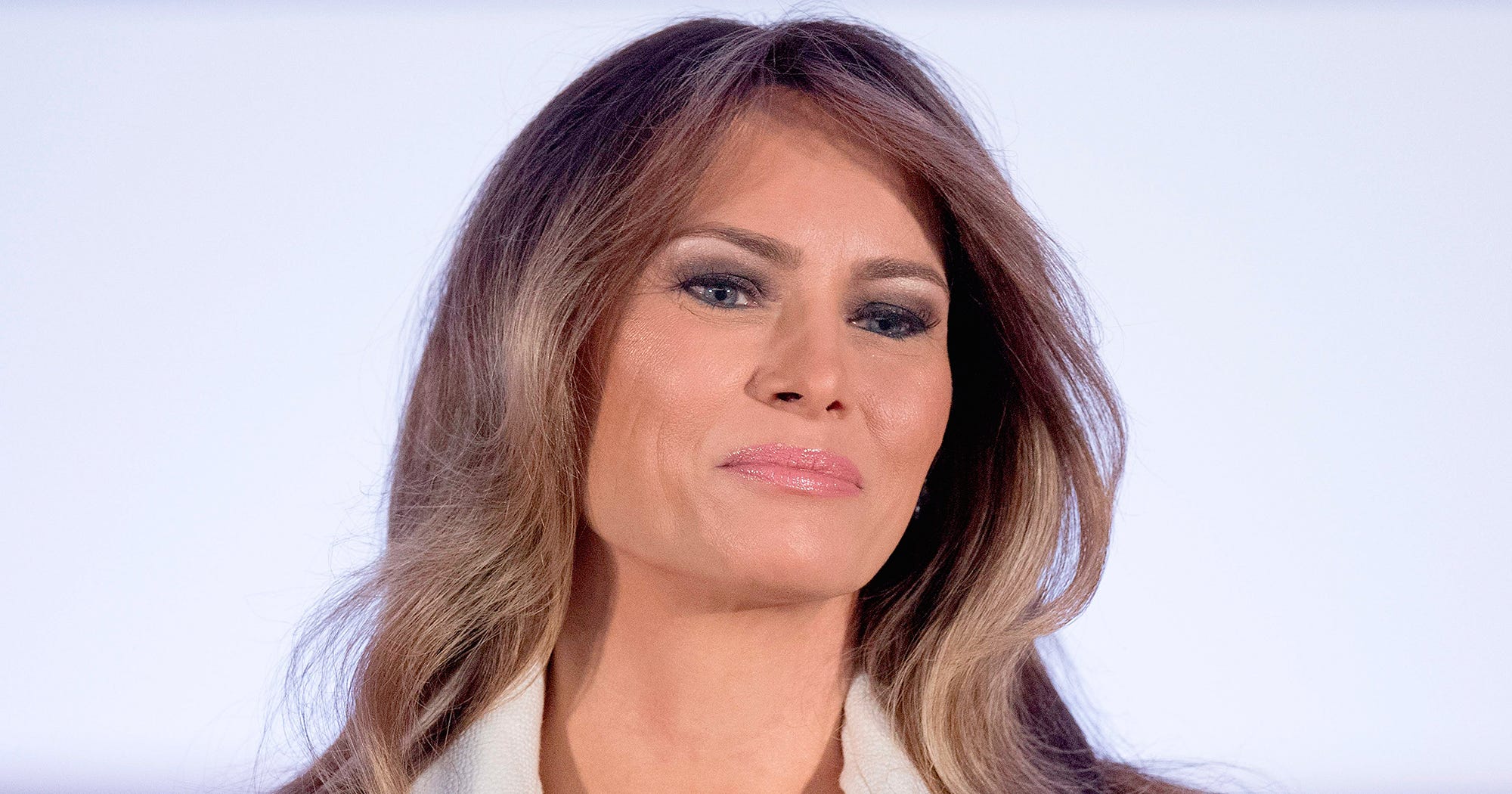
This early period marks the starting point of her visible fashion trajectory,
rooted in the professional standards and aesthetic norms of the modeling industry at that time.
The visual record from this era reflects a consistent alignment with contemporary runway trends,
establishing a baseline for her public image before her transition into political life.
The available evidence highlights specific moments that illustrate different facets of her public presence.
One documented scene shows Donald Trump and Melania Trump leaning together in a park after dark.
This image captures a more informal, personal moment, contrasting with the structured environment of fashion shows or formal events.
The setting—a park at night—suggests a departure from the bright, controlled lighting typical of professional modeling portfolios,
offering a glimpse into a different aspect of her public life.
These two data points—the late 1990s modeling style and the later park appearance—provide a limited but concrete view of her style evolution.
The first establishes her professional origins, while the second indicates a shift in context and setting.
However, the evidence does not detail the specific garments worn in the park scene,
nor does it describe any intermediate stages of her fashion choices between the late 1990s and this later moment.
Key observations from the available records include:
- Late 1990s public appearances mirrored the style of other models.
- A later documented moment features a casual, nighttime setting in a park with Donald Trump.
Without additional data, the full scope of her style evolution remains partially undefined.
The transition from runway model to First Lady involves numerous unrecorded phases,
and the current evidence only confirms these two specific instances.
Further documentation would be necessary to provide a comprehensive analysis of her fashion choices over time.
Public Perception and Media Coverage
The intersection of Melania Trump’s public image and digital media often reveals unexpected vulnerabilities in campaign messaging.
One notable instance involved a significant stumble during a major political event,
where intended promotional efforts were undermined by embarrassing search results.
This incident highlighted how quickly online platforms can amplify unintended consequences,
turning a planned moment of visibility into a subject of ridicule.
The core of the controversy centered on a specific visual campaign element.
Critics of the Trump administration quickly seized upon the imagery, altering it to create a widely circulated “Dope” poster.
This parody became popular, effectively hijacking the original narrative and redirecting public attention away from the intended message.
The ease with which critics copied and modified the original design demonstrated the fragility of controlled political branding in the digital age.
This episode serves as a case study in the risks of digital political communication.
When a high-profile moment is hit by such embarrassing Google results, the impact extends beyond mere embarrassment.
It reflects a broader challenge for political figures attempting to manage their public perception in an era where user-generated content and rapid meme culture can instantly subvert official narratives.
The “Dope” poster phenomenon illustrates that once an image enters the public domain,
control over its interpretation is largely relinquished.
The evidence confirms that critics actively participated in reshaping the narrative through this parody.
However, the specific metrics of the poster’s reach or the immediate political fallout remain unconfirmed in the available data.
What is clear is the mechanism: a planned visual statement was met with immediate, mocking replication.
This dynamic underscores the importance of anticipating how digital audiences might react to and reinterpret political imagery.
The incident remains a stark reminder that in modern media coverage,
the line between intended message and public perception can be perilously thin,
often decided by the speed and creativity of online critics rather than the original intent of the campaign.