Meet Zheng Qinwen: China’s Rising Tennis Star
Zheng Qinwen, born October 8, 2002, is a Chinese professional tennis player who has rapidly risen through the ranks.
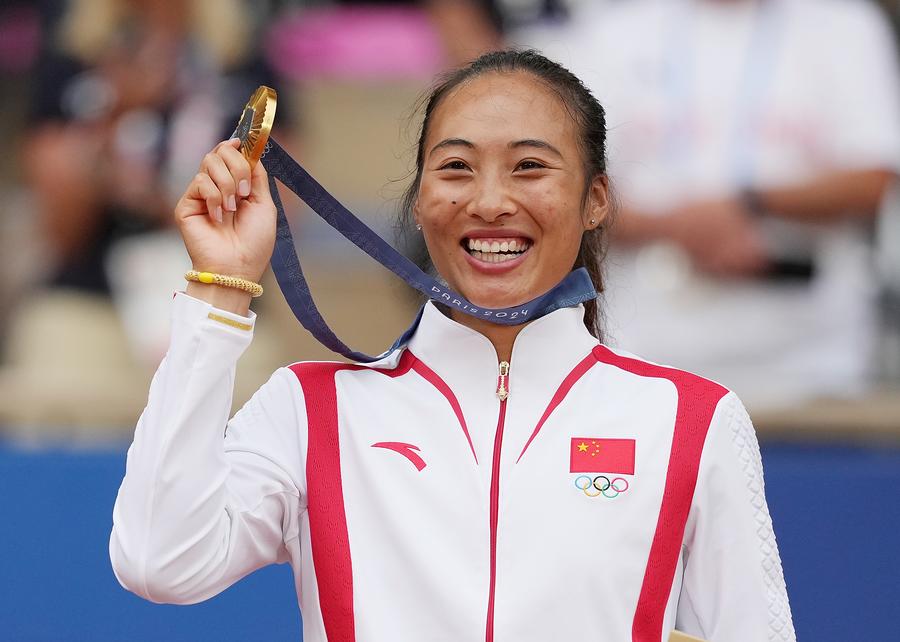
She became the first Chinese player since Na Li to cement a spot firmly inside the world’s top 10,
signaling a notable resurgence of Asian talent on the global stage.
Her ascent reflects both her individual skill and the broader growth of tennis in China,
positioning her as a key figure in the sport’s expanding international landscape.
Olympic Glory and Career Titles
Zheng Qinwen has carved a remarkable place in tennis history with a total of five career singles titles.
The most celebrated of these victories came at the 2024 Paris Olympics, where she captured the gold medal in the women’s singles event.
This triumph marked a historic moment, as Zheng became the first Asian tennis player to win an Olympic gold medal in singles competition.
Her Olympic success not only added a prestigious title to her résumé but also underscored her status as a trailblazer for Asian athletes on the global stage.
The other four singles titles she has secured further demonstrate her consistency and skill on the professional circuit.
While the specific tournaments and dates of these victories are not detailed in the available evidence,
the fact that she has amassed five singles titles overall highlights her ability to compete at the highest level across multiple events.
Playing Style: Aggressive Baseline Power
Zheng Qinwen’s approach on the court is unmistakably aggressive from the baseline.
Her strategy revolves around dictating play with a powerful serve that sets the tone for each point.
From the back of the court, she relies on a heavy‑topspin forehand to keep opponents on the defensive,
often pushing them back and creating openings for follow‑up shots.
This combination of a strong serve and a dominant forehand allows her to control rallies and force errors from her opponents.
The emphasis on baseline aggression means Zheng prefers to stay deep in the court,
using her forehand to generate pace and spin rather than relying on net play.
Her serve, described as a key weapon, provides immediate advantage by putting opponents under pressure from the start of the point.
The heavy topspin on her forehand adds a consistent lift and depth, making it difficult for opponents to anticipate and counter.
Overall, Zheng’s game is built around these two elements—her powerful serve and her heavy‑topspin forehand—creating a cohesive,
aggressive baseline style that keeps her opponents on the back foot throughout matches.
2026 US Open: A Battle with Iga Świątek
The 2026 US Open featured a high-profile clash between Iga Świątek and Qinwen Zheng.
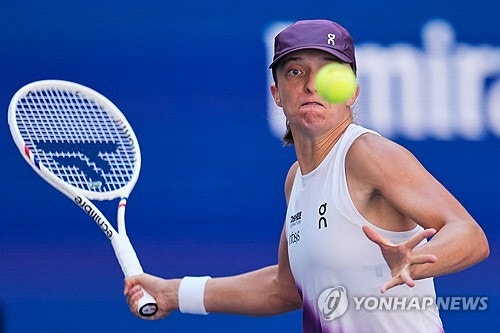
This matchup was highlighted in live updates from Day 9 of the tournament, which took place on September 7, 2026.
The coverage identified Świątek as the eighth seed in the women’s draw. In contrast, Zheng was noted for her status as an Olympic champion.
These designations underscored the significance of their encounter within the broader context of the event.
Specific details regarding the progression of this particular match are limited in the available records.
One confirmed instance of play occurred during the fourth round of the U. S. Open.
In this scene, Świątek, representing Poland, was observed returning the ball to Zheng, who represented China.
This action was documented in news reports dated September 8, 2026.
The timing suggests that this specific rally or point was part of the ongoing competition between the two players.
The available evidence confirms the following key facts about this encounter:
- Participants: Iga Świątek (Poland) and Qinwen Zheng (China).
- Tournament: 2026 US Open.
- Seedings and Titles: Świątek was the eighth seed; Zheng was the Olympic champion.
- Match Context: The match was part of the women’s draw on Day 9.
- Specific Action: Świątek returned the ball to Zheng during the fourth round.
No further details regarding the final score, set-by-set results,
or the ultimate winner of this specific match are provided in the current evidence.
The records do not confirm whether this fourth-round action led to a victory for either player or if the match extended beyond this stage.
Consequently,
the narrative remains focused on the confirmed presence and actions of both athletes during this specific phase of the tournament.
The juxtaposition of Świątek’s seeding and Zheng’s Olympic title highlights the competitive balance expected in such a fixture.
However, without additional data, the outcome and subsequent rounds remain unconfirmed.